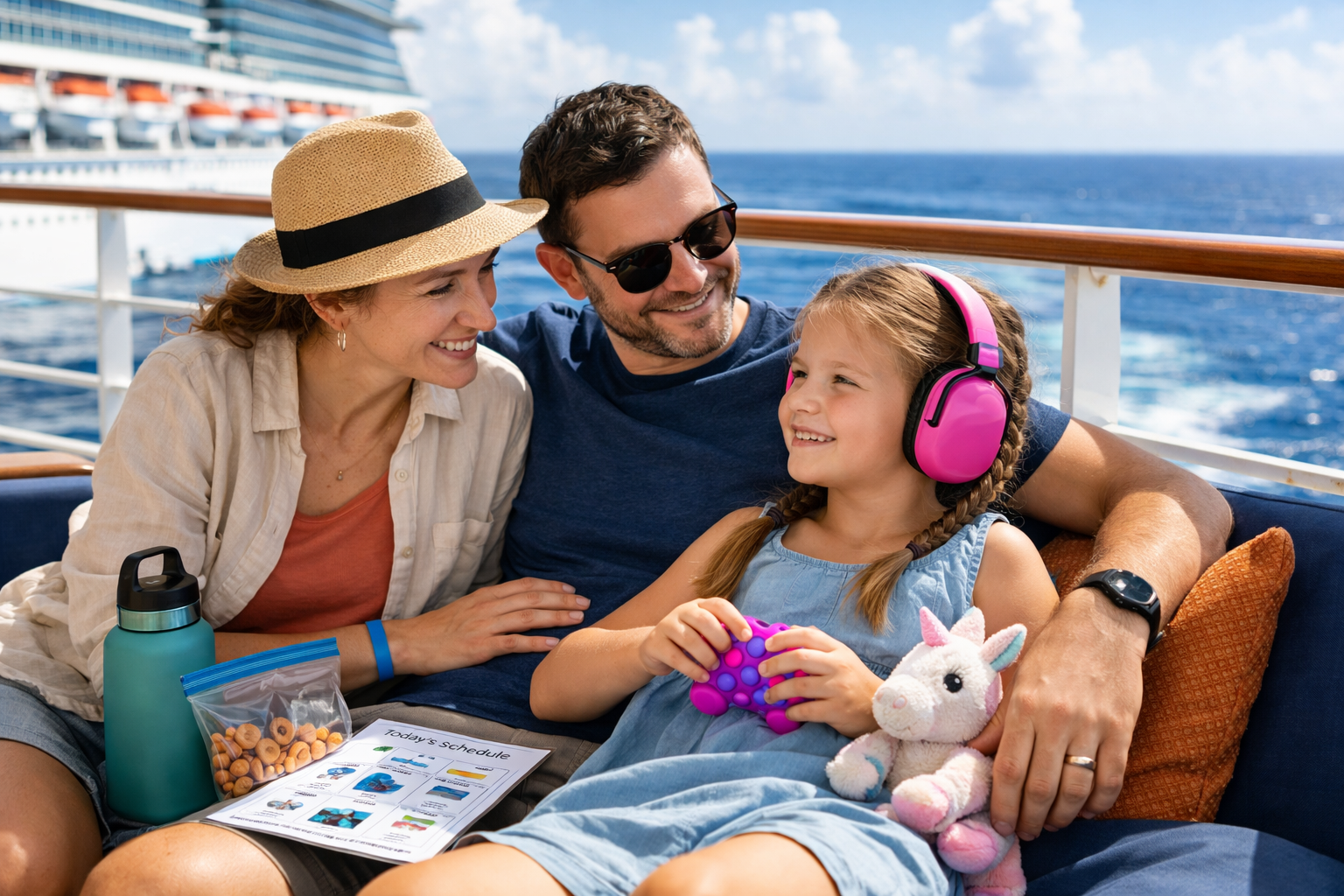
⚡ Quick Answer: What Is It Like Cruising With an Autistic Child?
- ✓Cruise ships offer predictable routine and structure that many autistic children respond well to
- ✓Food is always available with no pressure—one of the biggest unexpected wins
- ✓Many cruise lines offer accommodations like priority boarding—but you need to ask ahead
- ✓Embarkation day is the hardest—plan for sensory overload specifically on day one
- ✓Not every excursion will go well, and that's okay—flexibility matters most
- ✓Planning ahead and packing familiar, structured activities makes a real difference
Cruises Can Be a Great Fit for Some Autistic Children
Here's why the format works better than most people expect
When you think about what makes travel hard for autistic kids—unpredictable environments, unfamiliar food, constant transitions, new beds every night—a cruise actually addresses a lot of those stressors directly.
A cruise ship is a self-contained world with a predictable daily rhythm. The same cabin every night. Meals at consistent times. A buffet that's always there. A schedule that's visible in advance. The ship stays the same even when the ports change. For a child who finds unpredictability difficult, that consistency is genuinely helpful.
✅ What Often Works Well
- ✓Same cabin, same bed, every night
- ✓Predictable daily rhythm: meals, pool, activities, sleep
- ✓Food always available with no ordering pressure
- ✓No packing and unpacking between destinations
- ✓Lots of options with zero pressure to do any of them
- ✓Quiet spaces exist if you know where to look
⚠️ What to Watch For
- !Embarkation day is high-stimulation and crowded
- !Main pool decks can be loud and overwhelming
- !Unexpected PA announcements throughout the ship
- !Transitions between activities can be hard
- !Some excursions will feel unpredictable
- !Crowded dining rooms at peak dinner hours
💡 The key thing to know
You don't have to do everything on a cruise. Unlike a theme park or city trip, nothing expires and nobody is waiting. That low-stakes flexibility is one of the cruise format's biggest advantages for families who need the freedom to stop, reset, and try again.
Food Exploration Is Easier on a Cruise
A major unexpected benefit for sensory-sensitive and picky eaters
For many autistic children, food is one of the most anxious parts of any trip. Unfamiliar restaurants, surprise textures, pressure to try things, no fallback if something goes wrong. A cruise buffet completely flips this experience.
Because everything is visible before your child commits to it, there's no guesswork. They can look, smell, and decide—then walk away without consequences. A safe, familiar food is always on the same table.
- →Familiar fallback foods are always available: plain pasta, rice, chicken, bread, fruit
- →No ordering, no waiting, no being stuck with something unexpected
- →Trying a small amount of something new carries zero pressure or consequence
- →24-hour food availability removes the anxiety of "what if they won't eat dinner?"
- →Kids can choose the same safe foods every day without anyone making it an issue
🍔 A real silver lining
Many families find the low-pressure cruise buffet is where their child tries a new food for the very first time. No audience, no stakes, just options. It doesn't always happen—but the conditions for it are as good as they get.
Cruise Staff Are Often More Accommodating Than You'd Expect
Ask ahead—you may be surprised what autism-friendly accommodations are available
Cruise staff work with thousands of families across an enormous range of needs. Most are experienced, patient, and genuinely want your family's trip to go well.
Many cruise lines have specific accommodations available for guests with autism or sensory sensitivities. These may include:
- →Priority or reduced-wait boarding to avoid the embarkation crowd
- →Quieter dining arrangements or flexible meal times
- →Kids' club staff who can be briefed on your child's needs ahead of time
- →Quiet rooms or low-stimulation spaces on some ships
- →Digital muster drill options to avoid the crowd at the assembly station
⚠️ Important: ask before you book
These accommodations vary by cruise line and ship, and aren't always advertised. The only way to know what's available for your specific sailing is to contact the cruise line's accessibility or special needs department directly. They are used to these conversations and most lines have a dedicated team for it.
Autism on the Seas
Autism on the Seas is an organization that partners with major cruise lines to provide support specifically for families cruising with autism and other developmental disabilities. They may offer trained staff, structured programming, and accommodations that go beyond what a standard cruise line provides. Even if you don't book through them, their website is one of the most useful planning resources you'll find.
Their Facebook group is worth joining before your trip too. It's an active community of families who cruise with autistic children—real experiences, honest tips, and a great place to ask questions from people who've actually been there.
👉 Visit autismontheseas.com 👉 Join the Facebook GroupCruise Sensory Overload Can Happen Fast—Especially Day One
Plan for this specifically and it becomes manageable
Let's be honest: a cruise ship on embarkation day is a lot. Thousands of people boarding at once, music playing, PA announcements, buffet crowds, kids running everywhere. For a child who is sensitive to sensory input, this can spiral quickly.
Embarkation day is the highest-risk day of any cruise for sensory overload. There is simply more stimulation packed into a few hours than most other days of the trip combined. These tips can help:
- →If priority boarding is available for your cruise, use it. Fewer people, shorter lines, and a much calmer ship to walk into makes a real difference.
- →Stay off the main pool deck for the first hour or two. It's the loudest spot on the ship on embarkation day. Explore quieter upper decks first.
- →Get to your cabin as soon as it's ready and treat it as the reset base for the whole trip. Knowing you can always go back there takes a lot of pressure off.
- →Noise-canceling headphones might be the single most useful thing you can pack for a sensory-sensitive child on a cruise. Don't leave home without them.
- →Keep the first day simple. Arriving, eating a good lunch, and exploring the ship at your own pace is genuinely enough. Save the activities for day two.
- →Before you board, identify two or three quiet spots on the ship you can retreat to. Upper open decks, a library, and adult-only areas tend to be the calmest.
💙 It gets easier from day two
Once the ship becomes a familiar environment, the routine kicks in and many autistic children settle into cruise life more comfortably than their parents expected. The first 24 hours are almost always the hardest part of the whole trip.
Familiar activities help during the hard moments.
The Passport Pals Cruise Journal gives kids something structured and predictable to come back to—especially during downtime, transitions, and cabin time when everything else feels new.
Not Every Excursion Will Go Well—and That's Part of It
Flexibility is the skill that saves port days
Port days can be magical or they can be hard—sometimes both in the same hour. Excursions that look perfect on paper can feel overwhelming in practice: unfamiliar smells, uneven ground, unexpected noise, heat, crowds.
- →It's completely okay to leave an excursion early if it's not working.
- →Always have a backup plan: a quiet spot nearby, a shaded café, or simply returning to the ship.
- →Shorter and simpler excursions tend to work better than long, busy ones.
- →Your child may react differently to ports than you expect—in either direction.
- →Staying on the ship on port days is always a valid option and often a great one.
🧠 Reframe what a successful port day looks like
Twenty minutes in a port where your child found one thing they loved, then a calm return to the ship, is a successful port day. It doesn't have to look like anyone else's vacation to be a good one.
How to Prepare Your Autistic Child for a Cruise
Planning ahead matters more here than on almost any other trip
Families who have the best experiences cruising with autistic children are almost always the ones who put in the prep work beforehand. This doesn't mean planning every hour—it means reducing the number of unknowns your child has to encounter on arrival.
- →Contact the cruise line's accessibility or special needs department before you book. Ask specifically about priority boarding, kids' club support, and any autism accommodations available for your sailing.
- →Show your child photos and YouTube walkthroughs of the ship before you leave. Search the ship name on YouTube and watch a real walkthrough together. Familiarity before arrival matters.
- →Walk through what a typical cruise day will look like in concrete terms: wake up, breakfast, pool time, lunch, quiet time, dinner. Give it a structure they can hold onto.
- →Find two or three quiet spots on the ship in advance so you already know where to go when things get overwhelming.
- →Build real buffer time between activities. Transitions are usually harder than the activities themselves—don't schedule things back to back.
- →Pack comfort items from home: familiar snacks, a nightlight, white noise, headphones, and any sensory tools that help at home. Familiar objects do a lot of work in a new environment.
Downtime and Transitions Are Often the Hardest Moments
Have a plan for the in-between times
It's rarely the main activities that cause the most stress—it's the gaps between them. Waiting for food to arrive. Sitting in line for an excursion. The 20 minutes between getting back on the ship and knowing what comes next.
These in-between moments are when many autistic children find it hardest to regulate. A few things that help:
- →Have a consistent, familiar activity ready for these gaps—something your child already knows and finds calming.
- →A small drawing kit, sensory fidget tools, or a structured activity book can bridge these moments without screens.
- →Give advance transition warnings: "In 10 minutes we're going to the dining room."
- →Use the same bedtime sequence every night—the cabin routine becomes a reliable anchor.
- →A cruise journal or structured activity system gives kids something predictable to return to throughout the day.
📓 Why familiar, structured activities matter on a cruise
In a new environment, familiarity is regulating. A structured activity your child already knows—something they can engage with independently—provides a consistent touchpoint throughout the day. It's not about keeping them busy. It's about giving them something predictable to come back to when everything else is new.
❓ Frequently Asked Questions About Cruising With an Autistic Child
Are cruises autism-friendly?
Cruises can be a genuinely good fit for some autistic children. The predictable structure, consistent routines, and self-contained environment reduce a lot of the unpredictability that makes travel hard. Food is always available, the daily rhythm is consistent, and there's no pressure to do everything. Many families are surprised by how well it goes once they know what to prepare for.
How do you handle sensory overload on a cruise?
Plan for it before it happens, especially on embarkation day. Avoid the busiest areas initially, identify quiet spaces on the ship in advance, and always have a plan for where to go to reset. Noise-canceling headphones are essential. Having familiar, structured activities ready for downtime also helps reduce overstimulation during transitions.
What should I pack for an autistic child on a cruise?
Pack familiar comfort items, noise-canceling headphones, sensory tools your child uses at home, familiar snacks, a bedtime routine kit (nightlight, white noise, familiar blanket), and structured activities for downtime and transitions—like a cruise journal or activity system. Familiarity is your most powerful tool in a new environment.
Do cruise lines offer accommodations for autistic children?
Many do—options may include priority boarding, quieter dining arrangements, and kids' club support. These vary by cruise line and aren't always advertised. Contact the cruise line's accessibility or special needs department before you book and ask specifically what's available for your sailing.
Are there programs that help families with autism on cruises?
Yes. Autism on the Seas partners with major cruise lines to provide trained support staff, structured programming, and accommodations for families cruising with autism. Their website at autismontheseas.com is a great resource, and their Facebook group is an active community of families sharing real experiences—both are worth checking out before you sail.
How do I prepare my autistic child for a cruise?
Show them photos and YouTube ship walkthroughs before you leave. Walk through what a typical day will look like in concrete terms. Contact the cruise line about accommodations. Build buffer time between activities, identify quiet spaces in advance, and pack familiar comfort items and structured activities for downtime.
What are the hardest parts of cruising with an autistic child?
Embarkation day is typically the hardest—high-stimulation, crowded, and unpredictable. Loud pool decks, transition moments between activities, and waiting in lines can also be challenging. Planning specifically for these moments and having familiar structured activities ready makes a significant difference.
Are cruise ship buffets good for sensory-sensitive eaters?
Yes—they're one of the best food environments for sensory-sensitive kids. Everything is visible before committing, safe fallback foods are always available, and there's no pressure if something doesn't work. Many families find the cruise buffet is where their child tries something new for the first time, simply because the stakes are so low.
Every family deserves a great trip. 🚢
The Passport Pals Cruise Journal gives kids something familiar and structured to come back to all week—especially during the in-between moments. Free to download before you sail.
Get the Free Journal 🚢Cruising with an autistic child is not always easy. There will be moments that are harder than planned, port days that don't go as hoped, and times when the right call is simply to go back to the cabin and reset. That's real, and worth saying honestly.
But there will also be moments you didn't expect—a child who discovers they love watching the ocean from the deck, a meal where they try something new without being asked, a sea day that turns out to be the best day of the whole trip. Families who do this more than once usually say the same thing: it got better every time. The first cruise is the learning curve. Everything after that is the reward.